An updated risk assessment helps federal grant teams prevent issues before they happen. Learn how to review and refresh your risk assessment in January.
Risk assessments are often treated as paperwork—something created once and filed away until someone asks for it. But when used properly, a risk assessment is one of the most practical tools a federal grant team has. What risks should you assess? This can cover a broad range of areas including funding renewals, new funding, organizational resources, personnel capacity and training, technology, etc.
It’s not just about compliance. It’s about understanding where problems are most likely to arise and preparing for them before they become findings. One practical way to do this is by using a risk heat map, which helps teams visualize and prioritize risks based on likelihood and impact—so attention is focused where it matters most.
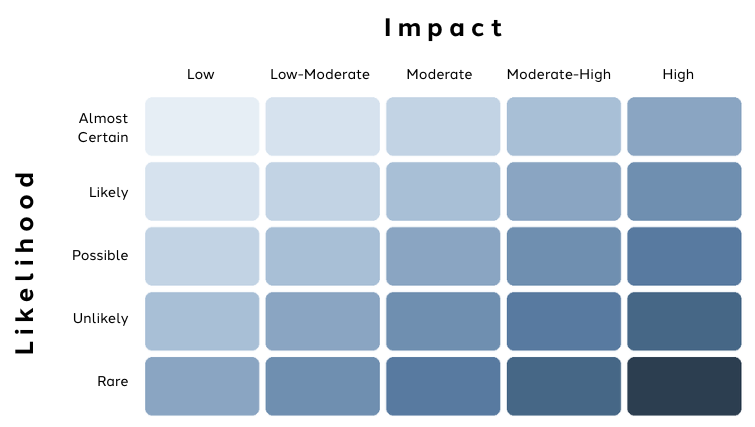
A strong risk assessment helps organizations prioritize oversight, allocate resources, and adjust internal controls based on actual conditions. Without it, teams are often reacting to issues instead of preventing them.
Risk doesn’t stay static. It changes as organizations grow, staff turn over, and new awards are added. That’s why reviewing your risk assessment annually—especially at the start of the year—is so important.
If you can’t remember the last time your risk assessment was updated, that’s a clear signal it deserves a review. Common triggers include new federal awards, changes in leadership or staffing, updated policies, or recent audit findings.
Even organizations with strong controls can see risk levels shift quietly over time. A January refresh helps ensure those changes don’t go unnoticed.
A risk assessment shouldn’t live in isolation. It should inform decisions about monitoring frequency, training priorities, and internal controls. When teams use it as a planning tool—not just a compliance document—it becomes a roadmap for the year ahead.